
31 Aug
Posted By0 Comment(s)103 View(s)
Table of Contents
- Comprehensive Introduction: King of Dates and the Throne of Health Benefits
- Origin and Lineage of the Fruit: The Origin of the Medjool Date and Its Journey of Spread
- Nutritional Analysis: Nutritional Value and Calories
- Scientific Research-Backed Health Benefits of Medjool Dates
- Distinction and Comparisons: How to Distinguish Medjool Dates From Others?
- Prices and Buying Guide: Medjool Date Prices and Best Varieties
- Uses of Medjool Dates in the Kitchen and Diet
- Scientific Sources and References
- Frequently Asked Questions (FAQ)
Since ancient times, dates have been a cornerstone of healthy nutrition in Arab and Middle Eastern cultures. However, one unique variety reigns supreme globally as the "King of Dates": the Medjool date. Discussing the benefits of Medjool dates goes far beyond merely enjoying a rich, soft, natural sugary taste; it extends to a comprehensive nutritional system that supports digestive health, the heart, and joints, while providing the body with sustainable energy throughout the day.
Premium Medjool dates are characterized by their large size compared to other varieties and their thick, juicy flesh that gives them a texture similar to toffee or natural caramel. Thousands of people search daily for the value of Medjool date benefits and how to incorporate this superfood into their daily diet—whether for athletes looking for a quick and sustainable energy source, elderly individuals wishing to support bone and heart health, or people following balanced diets.
In this detailed guide, we will dive deep into this blessed fruit to explore everything related to it: starting from a precise nutritional analysis, examining the calories and sugar content in Medjool dates, clarifying common confusion between it and other varieties by highlighting the difference between Medjool and Majhool dates as well as Mabroom vs. Medjool dates, and concluding with purchasing recommendations and understanding Medjool date prices in the market.
Read also: Benefits of Dates on an Empty Stomach: A Comprehensive Guide to Daily Health and Energy
Origin and Lineage of the Fruit: The Origin of the Medjool Date and Its Journey of Spread
When tracing the history of this ancient fruit, we find that the origin of Medjool dates dates back to the Tafilalet region in the eastern Maghreb, where it was cultivated specifically for kings and princes due to its high quality and the difficulty of caring for its palm trees. Over decades of agricultural development, offshoots of this blessed tree were transferred to many countries with dry, desert climates ideal for its growth.
Today, the Arabian Gulf region, particularly the Kingdom of Saudi Arabia, is one of the most important and finest habitats for cultivating this variety. Saudi Medjool dates are produced according to the highest international quality standards, specifically from farms in the Qassim region, known for its fertile soil and fresh water. This yields Qassim Medjool dates, renowned for their unique taste and world-class fruit quality.
Cultivating Medjool date palms relies on precise techniques in fruit thinning and regular irrigation. A single Medjool date requires special protection from weather fluctuations and pests to ensure the production of a large, flaw-free fruit with a firm skin that does not separate from the flesh, making premium Medjool dates the dream of every fine date connoisseur.
Nutritional Analysis: Nutritional Value and Calories
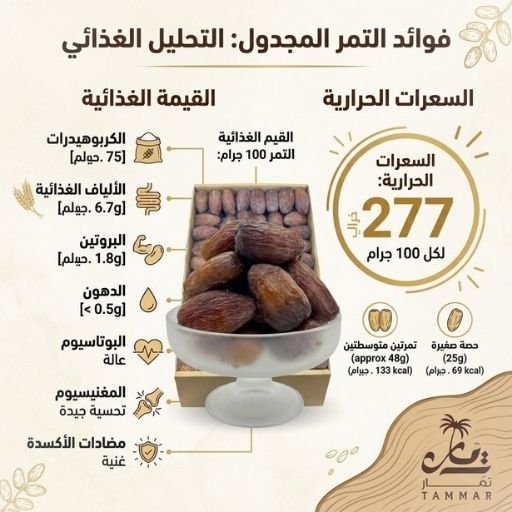
To understand why Medjool dates excel nutritionally, we must closely examine their impressive content of essential nutrients, vitamins, and minerals. Each fruit packs a concentrated dose of nutrients, making it a complete snack in itself.
Calories in Medjool Dates in Detail
Many people following weight loss diets or monitoring their blood sugar levels ask about the calorie count in a single Medjool date. With an average pitted weight of about 24 grams per fruit, a single date contains approximately 66 to 70 calories.
Although this number may seem high compared to water-rich fruits, these calories come paired with high nutrient density and dietary fiber that slows sugar absorption. This means the calories in Medjool dates translate into positive, sustainable energy without causing a sudden drop in vitality.
Sugar Content and Type in Medjool Dates
Understanding the sugar aspect of Medjool dates requires distinguishing between refined processed sugars and natural mono- and disaccharide structures. The sugar content in Medjool dates accounts for about 60% to 66% of the dried fruit's weight, consisting mainly of natural fructose and glucose, which are easy to digest and metabolize.
Medjool dates are characterized by a low-to-moderate Glycemic Index (GI), thanks to their generous amount of soluble and insoluble fibers. These fibers slow the absorption of sugar into the bloodstream, keeping blood glucose levels balanced without causing sharp insulin spikes in healthy individuals, or when consumed in moderation under medical supervision for diabetic patients.
Read also: Benefits of Sukari Dates for Health and the Body
Scientific Research-Backed Health Benefits of Medjool Dates
The benefits of Medjool dates extend to many organs and vital systems in the body. Below, we detail the top benefits supported by modern nutritional studies:
1. Boosting Digestive Health and Preventing Disorders
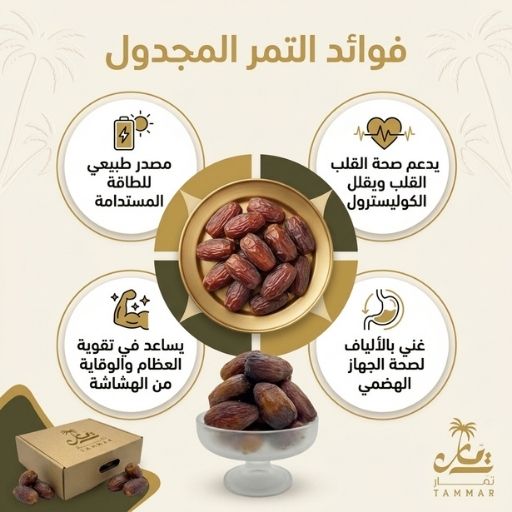
Medjool dates contain a very high proportion of dietary fiber; a single fruit provides the body with approximately 1.6 to 2 grams of fiber, representing about 7% of the recommended daily intake. This fiber helps:
- Stimulate intestinal peristalsis and facilitate digestion.
- Prevent chronic constipation and alleviate irritable bowel syndrome (IBS) symptoms.
- Feed beneficial gut bacteria (microbiome), boosting overall immunity.
2. Supporting Heart and Cardiovascular Health
One of the key reasons people seek the benefits of Medjool dates is their protective role in heart health. Medjool dates are an exceptional source of potassium, with a single fruit containing more potassium than a medium-sized banana on a weight-equivalent basis. Potassium works to:
- Regulate blood pressure by flushing excess sodium out of the body.
- Relax blood vessel walls and reduce arterial tension.
- Reduce oxidation of harmful cholesterol (LDL) thanks to powerful antioxidants such as flavonoids and phenolic acid.
3. Strengthening Bones and Preventing Osteoporosis
Medjool dates are rich in a complex and balanced blend of essential trace minerals required for bone formation and density, including calcium, magnesium, phosphorus, and copper. Regular consumption of premium Medjool dates helps maintain skeletal health and prevent osteoporosis, especially with advancing age.
4. Ultimate Natural Source of Energy and Vitality
For athletes and those engaged in strenuous work, Medjool dates serve as the ideal pre- or post-workout snack. Thanks to the combination of fast- and slow-absorbing carbohydrates alongside magnesium and potassium, consuming them helps reduce muscle cramps and rapidly and effectively replenishes glycogen stores in muscles.
Reliable Fact: Nutritional analysis shows that consuming 3 Qassim Medjool dates daily supplies the body with over 15% of its daily requirement for magnesium and fiber, making it an ideal alternative to artificial sweets and synthetic dietary supplements.
Distinction and Comparisons: How to Distinguish Medjool Dates From Others?
Many consumers are confused when purchasing due to similar names or regional and commercial branding differences. To ensure you get the authentic variety, here are comprehensive comparisons:
The Difference Between Medjool and Majhool Dates
Many people wonder about the difference between Medjool and Majhool dates and whether they are two different varieties. The definitive answer is: No, they are two names for the exact same fruit!
The original historical name for this variety in North Africa was "Majhool" (meaning "unknown"), so named because when the palm first appeared, its lineage was unknown. When its cultivation spread to Arab farms in the Levant and Saudi Arabia, it was called Medjool due to the unique braiding and folds of its skin around the fruit. Therefore, Medjool is identical to Majhool with no biological difference whatsoever.
What Is the Difference Between Mabroom and Medjool Dates?
To clarify the difference between Mabroom and Medjool dates, we have provided this direct comparison table:
| Comparison Point | Medjool Dates (Medjool) | Mabroom Dates (Mabroom) |
| Shape and Size | Large, broad oval shape with a firm, wrinkled skin | Long, slender shape, relatively thin with a smooth, tight skin |
| Texture and Feel | Soft, moist, juicy; melts in the mouth like toffee | Semi-dry, chewy texture |
| Sweetness Level | Rich, concentrated sweetness resembling caramel taste | Mild, light sweetness, not overly sharp |
| Common Use | Direct consumption, luxury hospitality, gifts, and smoothies | Daily consumption with Arabic coffee, long shelf-life storage |
Prices and Buying Guide: Medjool Date Prices and Best Varieties
Medjool date prices vary in the market based on several key factors that smart consumers should know before buying:
- Size Grade: Medjool dates are classified into sizes (Medium, Large, Jumbo, Super Jumbo, King). Larger fruit sizes mean fewer pieces per kilogram, increasing the price.
- Skin Separation Rate: The more closely the skin adheres to the flesh without air gaps, the higher the quality grade (Premium First Grade).
- Origin and Farm: Saudi Medjool dates—especially Qassim Medjool—hold high market value due to clean farming practices and adherence to organic standards during cultivation and harvesting.
- Storage and Packaging Methods: Vacuum packaging or thermal refrigeration preserves the fruit's moisture and directly impacts the price of Medjool dates.
If you are looking for the price per kilogram of Medjool dates, it generally ranges across medium to premium luxury categories. Getting a fair price for exceptional quality requires choosing a trusted source that guarantees fresh, newly harvested fruits.
Read also: The Best Way to Store Dates
Get the Finest Premium Medjool Dates from Tammar Store
Looking for large, fresh Medjool dates with a melt-in-your-mouth caramel texture? Tammar Store provides you with the finest harvest from registered Saudi farms, packaged luxuriously to guarantee ideal preservation and fast delivery right to your doorstep.
Enjoy exclusive discounts and an unforgettable shopping experience now!
? Shop now at Tammar Dates Production Store
Uses of Medjool Dates in the Kitchen and Diet
Enjoying Medjool dates is not limited to eating them directly alongside coffee; they can also serve as a staple ingredient in innovative dishes and healthy sugar substitutes:
- Natural Sweetener for Desserts and Drinks: You can blend Medjool dates with milk and oats for a high-energy pre-workout smoothie.
- Stuffed with Nuts and Cheese: Split open a Medjool date and stuff it with almonds, walnuts, or ricotta and feta cheese for a sophisticated appetizer combining sweet and savory flavors.
- Healthy Date Syrup and Sauces: Medjool dates can be cooked down into a rich, thick syrup to drizzle over pancakes or use as a glaze for meats and grills.
In conclusion, it is clear that Medjool dates are not just a delicious fruit or natural sweet, but a complete health investment offering countless benefits for your body. From boosting heart and digestive health to providing clean energy, Medjool remains the ultimate choice for hospitality and nutrition.
Whether you are searching for premium Qassim Medjool dates or want to know quality and pricing details, you can always rely on trusted sources and specialized outlets like Tammar Store to ensure you receive authentic fruits worthy of your health and hospitality.
Read also: Types of Saudi Dates: Your Comprehensive Guide
Frequently Asked Questions (FAQ)
Q1: How many Medjool dates are allowed per day for diabetic patients?
A1: Diabetic patients are advised to consume a maximum of 1 to 2 Medjool dates per day within their allowed carbohydrate and calorie limits. It is preferable to pair them with a source of healthy protein or fat (such as walnuts or almonds) to slow sugar absorption, after consulting a specialized physician.
Q2: Are Medjool dates available for sale at Tammar Store year-round?
A2: Yes, Tammar Store offers complete options for Medjool dates for sale in various sizes and weights throughout the year. Dates are stored in temperature-controlled cooling rooms to maintain their freshness and premium quality.
Q3: What makes Medjool dates more expensive than other varieties?
A3: The higher price of Medjool dates is due to the meticulous manual care required by Medjool palm trees, the labor-intensive fruit thinning and pruning processes needed to achieve large fruits, as well as high global demand for them as one of the most luxurious date varieties.
Q4: How should Medjool dates be stored to maintain their softness?
A4: The best way to store Medjool dates is in airtight containers in the refrigerator (lasting several months) or in the freezer, where they can be kept for over a year without losing their distinct taste or texture.
Read also: Benefits of Ajwa Dates You Never Knew Before!
Sources and References
This comprehensive medical and nutritional guide was prepared relying on a collection of trusted global and local sources and studies to ensure information credibility:
- Institute of Nutrition and Agricultural Sciences Studies: Research on Medjool date benefits and antioxidant and potassium content.
- National Center for Palms and Dates in Saudi Arabia: Technical quality reports on Medjool date benefits and premium Medjool date classifications.
- Global Food Databases (USDA FoodData Central): Numerical analysis of calories and sugar content in Medjool dates.
- Journal of Agricultural and Food Sciences: Comparative studies on genetics and cultivar origins between Medjool vs. Majhool dates, as well as Mabroom vs. Medjool dates.
- Gulf Agricultural Market Indicators: Analytical study on the market price development of Medjool dates and the price per kilogram based on farm quality.
Leave a Comment